Explanatory Virtues
In order to make an inference to the best explanation, we must be able to determine which of several candidate explanations is best. There are multiple respects in which one explanation may be better than another. Simpler explanations are more likely to be true than unnecessarily complicated ones, for example. And a broader explanation (one that explains more stuff) is better than one that explains less. As mentioned on the previous page, simplicity and breadth are examples of theoretical or explanatory virtues—characteristics that make a theory or explanation more likely to be true. (I am using the terms explanatory virtue and theoretical virtue interchangeably, but see the fine print section on the previous page for a subtle distinction between them.)
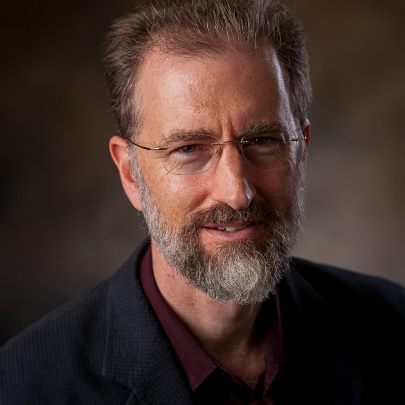
Numerous other explanatory virtues have been identified and discussed in the philosophical literature as well. Historian and philosopher of science Michael Newton Keas has developed a system of classification to help us understand how the virtues are interrelated. His essay “Systematizing the theoretical virtues,” published in the top-tier philosophy journal Synthese in 2018, is an open access article, so anyone can read it for free.Keas (2018), “Systematizing the theoretical virtues,” Synthese 195:2761-2793. I’ll provide a brief summary of Keas’ classification schema below, but I encourage you to download and read his whole essay.
Keas organizes twelve theoretical virtues into four classes: evidential, coherential, aesthetic, and diachronic virtues, with three virtues in each class. The first virtue listed in each class is the most basic, foundational virtue of that class. The second and third virtues build upon that foundation and go beyond it in various ways, as illustrated in the first three examples below.
Evidential virtues
The first three theoretical or explanatory virtues (qualities of a good theory or explanation) are evidential virtues. Evidential virtues have to do with how well the theory comports with the empirical evidence we have obtained about the phenomenon we are trying to explain.
Evidential accuracy: The first and most basic evidential virtue is evidential accuracy, also called evidential fit. The more closely a theory or explanation fits (or agrees with) the observations we have made, the greater its evidential accuracy.
The early 17th-century astronomer Johannes Kepler hypothesized that planetary orbits are elliptical rather than circular. This hypothesis fit observational measurements more closely than Nicolaus Copernicus’s theory that the planets follow circular orbits around the sun. So, Kepler’s theory displayed greater evidential accuracy than Copernicus’s theory.
Causal adequacy: The second evidential virtue is causal adequacy, which goes beyond mere evidential accuracy. To say that a theory or explanation is causally adequate means it identifies a cause (or a set of causal factors) that could plausibly produce the effect we are trying to explain. This virtue presupposes the previous one (evidential accuracy) but adds to it a further criterion about the causes involved in the explanation.
Isaac Newton’s theory of gravity identified a plausible reason why the planets move in elliptical orbits, as Kepler had previously discovered. According to Newton, the sun’s gravity exerts a force on each planet, and this force of gravity causes the planet to move in an elliptical orbit around the sun. Although Kepler’s theory fit the evidence well, it didn’t identify any cause for the elliptical motion of planets. So, Newton’s theory exhibits greater causal adequacy than Kepler’s theory.
Explanatory depth: The third evidential virtue is explanatory depth, which goes even further than causal adequacy. A theory or explanation exhibits explanatory depth to the extent that it can provide a deeper explanation of the causes themselves, or of the causal history leading to the effect we are trying to explain.
Although Newton identified gravitational force as a cause for the elliptical motion of the planets, his explanation went no deeper than that. Newton didn’t offer any explanation for the force of gravity itself; his theory simply presupposed that all objects with mass exert gravitational forces on each other. (When some of his contemporaries demanded that he provide an explanation for the force of gravity itself, Newton famously responded with the Latin phrase “hypotheses non fingo,” which means “I feign no hypotheses.”) However, Albert Einstein’s theory of gravity went deeper than Newton’s, explaining gravity itself as an effect of spacetime curvature. Thus, Einstein’s theory exhibits greater explanatory depth than Newton’s.
Coherential virtues
The next three qualities of a good theory (or explanation, or hypothesis) are coherential virtues, which concern how well the theory coheres with itself and with other theories.
Internal consistency: The first and most basic coherential virtue is internal consistency, which simply means that the theory or explanation doesn’t contradict itself. In other words, an internally consistent theory comprises propositions that are logically consistent: it is at least logically possible for all of the theory’s claims to be true at the same time.
Internal coherence: The second coherential virtue, internal coherence, goes beyond the minimal requirement of logical consistency. A theory or explanation is said to be internally coherent when it is not only consistent but also fits together in an intuitively plausible way. In particular, an internally coherent theory lacks ad hoc assumptions—assumptions that are merely tacked on to solve isolated problems.
Universal coherence: The third coherential virtue, universal coherence, means that the theory or explanation coheres not only with itself (internal coherence) but also fits together nicely with other well-supported theories and beliefs.
Aesthetic virtues
The adjective aesthetic means “beautiful” or “attractive.” The aesthetic virtues have to do with aspects of theories (or explanations) that are intuitively and intellectually beautiful, attractive, or elegant.
Beauty: The most basic aesthetic virtue is beauty. Unlike the beauty we find in many visual and auditory phenomena such as sunsets and symphonies, however, the explanatory virtue of beauty doesn’t necessarily involve our physical senses. A beautiful explanation or theory is one that is intuitively attractive and satisfying to our minds: it evokes the sort of pleasure we feel when we suddenly understand something we had previously found confusing or puzzling.
Since it may not be obvious how beauty informs theory evaluation, it will be helpful to consider a remarkable example from the biological sciences:
James Watson, who won the Nobel Prize (together with his colleague Francis Crick) for discovering the structure of DNA, said the aesthetic beauty of the double-helix model played a significant role in persuading scientists—including himself—that this hypothesis was correct. In his book The Double Helix: A Personal Account of the Discovery of the Structure of DNA, Watson recalls how the great chemist Rosalind Franklin responded when she first saw the model: “like almost everyone else, she saw the appeal … and accepted the fact that the structure was too pretty not to be true.”James D. Watson, The Double Helix: A Personal Account of the Discovery of the Structure of DNA (New York: Simon & Schuster, 2001), 210. It wasn’t just the visual beauty and symmetry of the helical structure that evoked such a reaction. It was the fact that many previous discoveries about the chemical makeup of DNA, along with a crucial clue that Franklin herself had uncovered with her groundbreaking work in x-ray crystallography, all came together in a beautiful way that suddenly made perfect sense.
Simplicity: A second aesthetic virtue, closely connected with beauty, is simplicity. All else being equal, simpler theories and explanations are more likely to be true than unnecessarily complicated ones. In other words, a simple theory explains the same facts as rival theories, but does so with less theoretical content.
Although simplicity is one of the best-known and most important criteria of theory evaluation in the sciences, it is frequently misunderstood and misapplied—even by scientists themselves! Like all other explanatory virtues, simplicity is a desirable feature of the hypothesis we are evaluating, not a feature of the causes or causal factors the hypothesis identifies in its explanation. The following example should help to clarify this crucial distinction.
In his book The God Delusion, biologist Richard Dawins writes: “A designer God cannot be used to explain organized complexity because any God capable of designing anything would have to be complex enough to demand the same kind of explanation in his own right.”Richard Dawkins, The God Delusion (New York: Mariner Books, 2008), 136. This is an example of the confusion mentioned above: Dawkins erroneously applies the criterion of simplicity to the hypothesized cause rather than to the hypothesis. To see why it is the simplicity of the hypothesis that matters, consider the following illustration:A set of animal tracks in the snow might be best explained by the hypothesis that a rabbit recently hopped through the area, even though a rabbit is a highly complex entity—much more complex than the tracks it left in the snow. The hypothesis that a rabbit made the tracks is a simple hypothesis even though it involves the causal action of a complex entity. The hypothesis that a rabbit made the tracks is simpler than alternative hypotheses involving random, coincidental melting patterns that happen to look like rabbit tracks, for instance. Even though melting itself is a relatively simple process, the melting hypothesis is more complicated than the rabbit hypothesis because it requires numerous independent melting events that coincidentally happen to leave patterns similar to rabbit tracks. As this example illustrates, the simplicity of a hypothesis has little to do with the simplicity or complexity of the causal entities or processes it posits.
Unification: The third aesthetic virtue is unification, also called breadth or scope. A broader theory—one that unifies or explains a broader range of phenomena—is better than one that explains less. As Keas points out, unification and simplicity are complementary virtues: a simple theory explains the same facts as rival theories, but does so with less theoretical content; whereas a unified theory explains more kinds of facts than rivals with the same amount of theoretical content.Keas, p. 2775
Moreover, there is an even closer connection between the virtue of simplicity and the virtue of unification, as one of my former students pointed out to me. Because a theory with broad explanatory scope unifies many different phenomena under a single explanation, adopting such a theory into our belief system tends to simplify our belief system as a whole. Thus, the virtue of unification can be viewed as an extension of the virtue of simplicity to one’s whole belief system or worldview.Liza-Claire Vandenboom developed this insightful point in her final essay for an Epistemology course I taught at The King’s College in 2020. In her words: “Valuing theories with broad explanatory scopes is valuing simplicity across one’s entire belief system.”
Diachronic virtues
The word diachronic means “through time.” The diachronic virtues concern how well a theory or explanation fares over time.
Durability: The most basic diachronic virtue is durability, which means simply that a theory or explanation has survived empirical testing. The longer a theory survives repeated tests designed to refute it, the more durable it is.
In order for a theory to survive empirical testing, of course, it must be testable in the first place—that is, we must be able to derive predictions from it that can be tested or checked in some way. In some philosophical discussions of theoretical virtues, testability is treated as an independent virtue, separate from the others; but in Keas’ systematization, testability is a prerequisite for durability.
A durable theory is one that has successfully predicted new observations or, at least, has been able to accommodate new data (perhaps with modest adjustments to the theory). Mere accommodation won’t earn high marks in durability, however. Predictive success—a track record of generating successful new predictions—is a much more important aspect of durability. Predictive success is widely considered one of the strongest indicators of a theory’s truth.
Fruitfulness: The second diachronic virtue is fruitfulness, which presupposes but goes beyond mere durability and even beyond predictive success. A fruitful theory is one that leads to additional discovery or inspires new avenues of successful research. For example, it may lead to new discoveries by making novel and unexpected predictions that are observationally confirmed. Or, it may pave the road to a more unifying explanation that builds upon the original theory (in a way that isn’t merely an ad hoc adjustment to avoid refutation).
Applicability: The last diachronic virtue is applicability, which is a practical or pragmatic counterpart to fruitfulness. Whereas fruitfulness has to do with a theory’s role in expanding our knowledge of the world, applicability has to do with the theory’s role in guiding our actions or in giving us the ability to exercise control over certain aspects of nature—for example, by leading to new scientific technologies.
Although this last virtue focuses on the practical applications of a theory or explanation, it is not merely a pragmatic consideration. As Keas points out, the practical (or pragmatic) success of a theory often is a strong indicator that the theory is true, not merely that it is useful. We can think of applicability as a special kind of predictive success: the theory is proving itself reliable as a guide to our actions, by helping us to predict and plan the outcomes of those actions. Moreover, its reliability may be best explained by the theory’s truth! Thus, the method of inference to the best explanation itself gives us good reason to think that applicable theories are more likely to be true than non-applicable, useless ones.
These twelve theoretical virtues are the criteria and desiderata we can use to judge between competing hypotheses, in order to evaluate which is the best explanation for whatever we’re trying to explain. Sometimes there won’t be a clear winner, of course. Several competing explanations might have similar virtues. More often, rival explanations will excel in different virtues, and we must make the difficult decision which virtues to prioritize. Nevertheless, even in messy cases like that, a careful assessment of each theory’s virtues might make it obvious which theory is best overall.
For a real-life illustration, consider again the contest between Newton’s theory of gravity and Einstein’s theory of gravity, mentioned in a previous example above. Newton’s theory excelled in simplicity: his famous equation for the gravitational force can be readily understood by anyone with a high school mathematics education. The equations of Einstein’s theory, in contrast, are far more complicated. Genuis though he was, Einstein was unable to work out the mathematics on his own; he had to recruit a professional mathematician (his friend and former classmate Marcel Grossmann) to help him with the math. Nevertheless, Einstein’s theory made such great advances in other virtues (including explanatory depth and unification) that it clearly emerged as a superior theory overall, despite the loss in simplicity.
When one theory is clearly best overall (even if a rival theory exceeds it in one or two virtues), we’re justified in making an inference to the best explanation—that is, we can reasonably conclude that the winning explanation is probably true. We can use this method of reasoning to evaluate scientific explanations, historical hypotheses, philosophical theories, or even entire worldviews.
Inference to the best explanation is used by scientists, historians, philosophers, and—often unknowingly—by ordinary people in everyday life. Unlike formal logic, inference to the best explanation wasn’t invented by philosophers, nor is it the exclusive craft of highly trained thinkers. It’s really just a way of clarifying commonsense principles of reasoning that we all use on a daily basis. Our minds are pre-programmed to recognize and appreciate explanatory virtues, even if we’ve never heard of them. We intuitively understand that simple, unified, elegant explanations are better (and more likely to be true, in general) than complicated, disjointed, messy ones. So, the method of inference to the best explanation is just a way of recognizing and refining these commonsense, intuitive criteria we already use without even realizing it.